Montessori
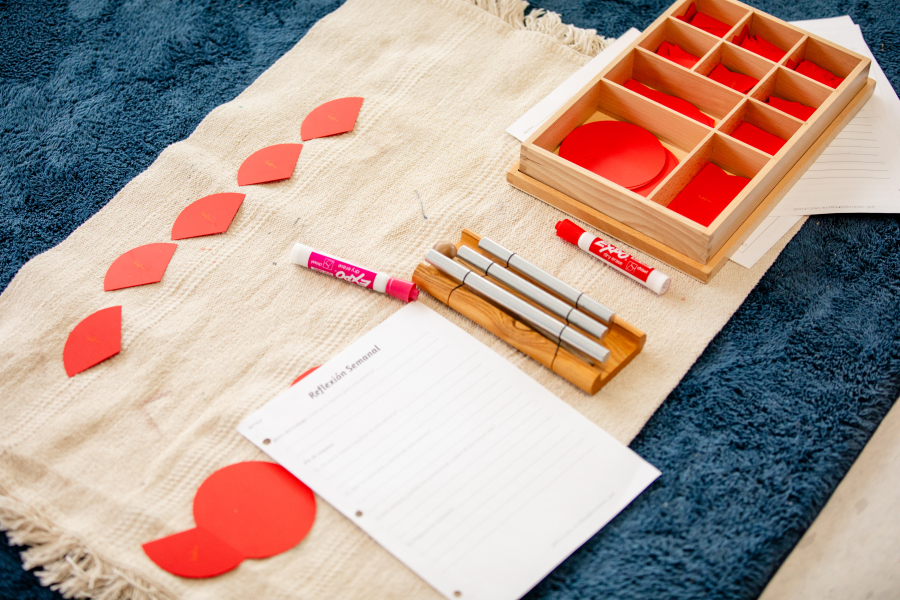
Hands-on Montessori learning encourages independence, problem-solving, and a lasting love of discovery.

One test of the correctness of educational procedure is the happiness of the child.” - Maria Montessori
Maria Montessori
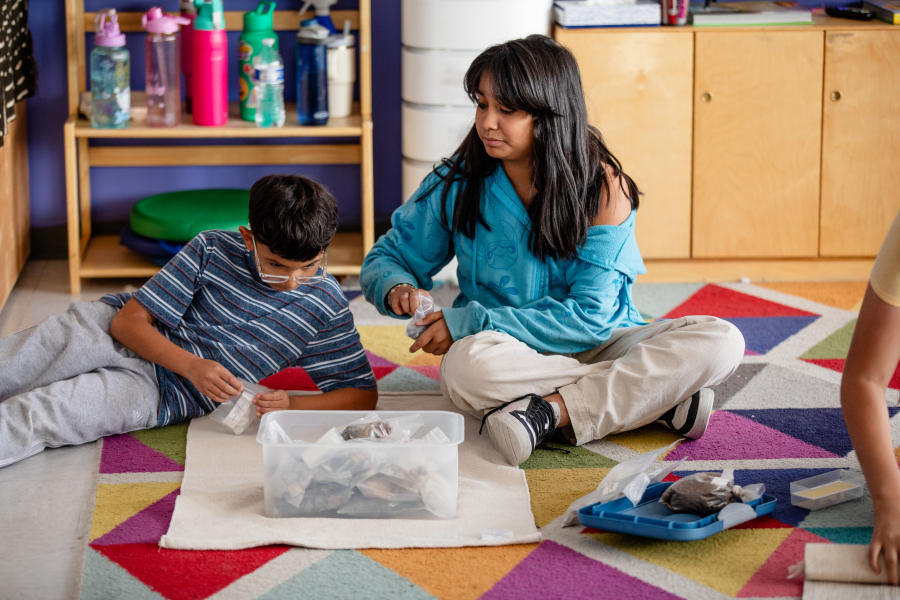
Montessori is a child-centered approach to education that encourages students to learn through exploration, hands-on experiences and independent discovery. Students progress at their own pace in thoughtfully prepared environments, developing confidence, responsibility and a love of learning – all while being guided by trained educators.
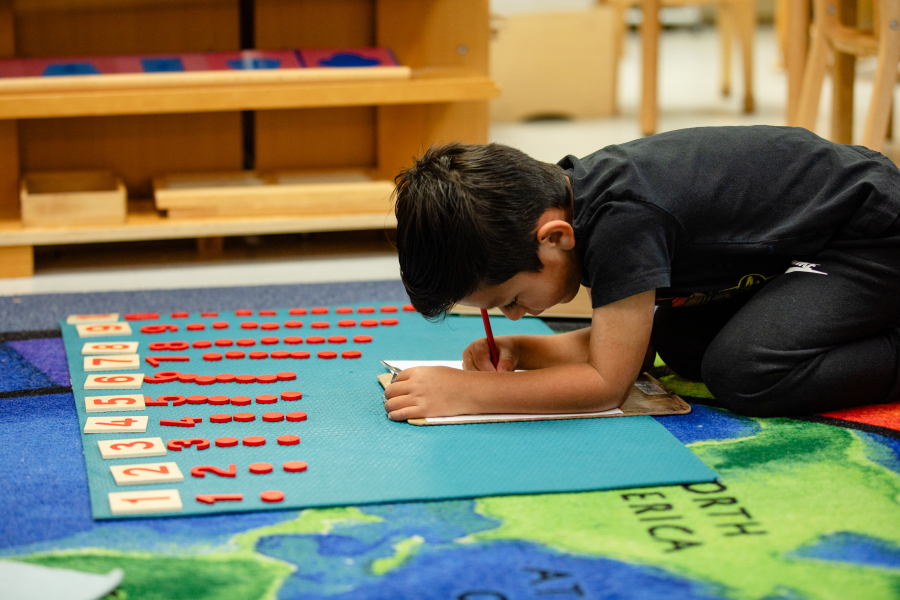
What is Montessori?
The Montessori model of education was developed a century ago by Maria Montessori. Through this world-renowned style of learning, students are empowered to explore their interests, build critical-thinking skills and develop a strong sense of curiosity about the world around them.
Child-Centered Learning
- Students learn at their own pace
- Hands-on, experiential education
- Teachers guide rather than lecture
- Learning builds independence and confidence
Whole-Child Development
- Focus on academic, social and emotional growth
- Collaborative mixed-age classrooms
- Encourages responsibility and leadership
- Supports creativity and critical thinking
Lifelong Skills
- Develops problem-solving and self-motivation
- Encourages curiosity and discovery
- Builds real-world connections to learning
- Fosters a lasting love of learning
Who is Maria Montessori?
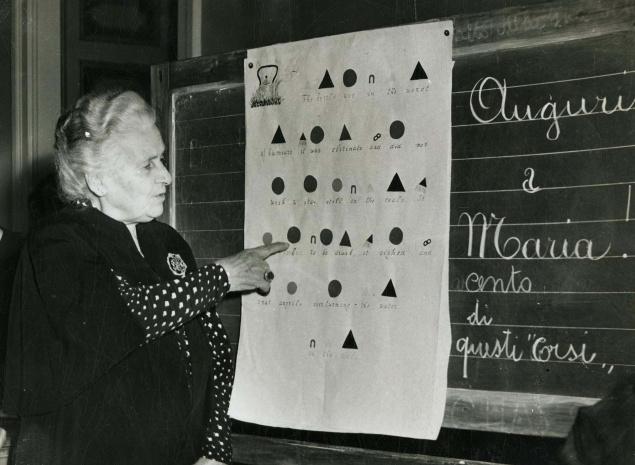
Dr. Maria Montessori was one of the most influential pioneers in early childhood education. Born in Italy in 1870, she became the first woman to graduate from the University of Rome Medical School and later turned her focus to education through her work with children with special needs. Approaching learning as a scientist, she carefully observed how children learn, and then adapted the classroom environment to best support each child.
Montessori believed all children are naturally motivated to learn when provided with the right environment and opportunities. Her child-centered method is still used today, combining hands-on learning, independence and freedom within a thoughtfully prepared classroom. The success of her work led to Montessori schools around the world, and her ideas continue to influence both Montessori and mainstream education more than 100 years later.
Developing the Child
Dr. Maria Montessori saw that children held within them something wonderful and special that could be the key to changing the world. She saw that children were inherently good and that, if allowed to develop freely, then they felt connected to the world around them and were naturally caring to each other. The more that she worked with the children, the more convinced she was that they had precise inner guides and that the work of adults was to help them to be all that they could be. She felt that it was the spiritual nature of children that had been forgotten and denied, and that children could therefore show adults the way to return to a more meaningful, holistic way of living.
Montessori’s approach to education was to observe children carefully to discover their individual needs. She was a great innovator, always aware that education needs to change as society changes.
Key Montessori Elements
- Montessori education supports the whole child through intellectual, social, emotional, physical and spiritual development.
- Teachers guide students to become confident, capable and independent learners prepared for the future.
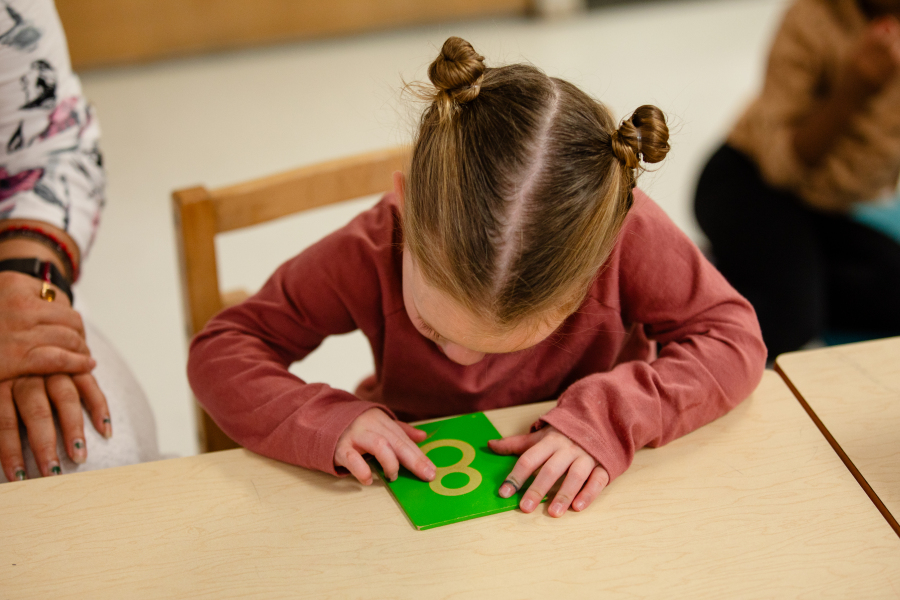
- Hands-on Montessori materials are thoughtfully designed to build understanding, coordination, problem-solving and practical skills.
“I do not believe there is a method better than Montessori for making children sensitive to the beauties of the world and awakening their curiosity regarding the secrets of life.”
– Gabriel Garcia Marquez (Colombian Novelist and Nobel Prize in Literature)
Common Questions about Montessori
How many students are typically in a Montessori class?
Unlike some private schools, which strive for very small classes, Montessori values the lessons of community when the size of the class is somewhat larger.
Montessori classes for children above the infant and toddler level might include 20-30 students whose ages span three years. All members of the community benefit from this set up. Older students are proud to act as role models while younger ones feel supported and gain confidence about the challenges ahead.
Classes for infants and toddlers are smaller, with typically 10-15 children.
How can children learn if they’re free to do whatever they want?
Dr. Montessori observed that children are more motivated to learn when working on something of their own choosing. A Montessori student may choose his focus of learning on any given day, but his decision is limited by the materials and activities — in each area of the curriculum — that his teacher has prepared and presented to him.
Beginning at the elementary level, students typically set learning goals and create personal work plans under their teacher’s guidance.
Why are Montessori schools “all work and no play”?
Dr. Montessori realized that children’s play is their work – their effort to master their own bodies and environment – and out of respect she used the term “work” to describe all their classroom activities. Montessori students work hard, but they don’t experience it as drudgery; rather, it’s an expression of their natural curiosity and desire to learn.
If children work at their own pace, don’t they fall behind?
Although students are free to work at their own pace, they’re not going it alone. The Montessori teacher closely observes each child and provides materials and activities that advance his learning by building on skills and knowledge already gained. This gentle guidance helps him master the challenge at hand – and protects him from moving on before he’s ready, which is what actually causes children to “fall behind.”
Do Montessori teachers follow a curriculum?
Montessori schools teach the same basic skills as traditional schools, and offer a rigorous academic program. Most of the subject areas are familiar – such as math, science, history, geography and language – but they are presented through an integrated approach that brings separate strands of the curriculum together.
While studying a map of Africa, for example, students may explore the art, history and inventions of several African nations. This may lead them to examine ancient Egypt, including hieroglyphs and their place in the history of writing. The study of the pyramids, of course, is a natural bridge to geometry. This approach to curriculum shows the interrelatedness of all things. It also allows students to become thoroughly immersed in a topic – and to give their curiosity full rein.
Can Montessori accommodate gifted children? What about children with other special learning needs?
An advantage of the Montessori approach – including multi-age classrooms with students of varying abilities and interests – is that it allows each child to work at her own pace. Students whose strengths and interests propel them to higher levels of learning can find intellectual challenge without being separated from their peers. The same is true for students who may need extra guidance and support; each can progress through the curriculum at his own comfortable pace, without feeling pressure to “catch up.”
We might note that from a Montessori perspective, every child is considered gifted, each in her own way. For every child has her own unique strengths – it is all a matter of degree.